The Story of Coffee
Twelve centuries of discovery, trade, revolution, and obsession — from an Ethiopian goat herder to your morning pour-over.
The Legend of Kaldi
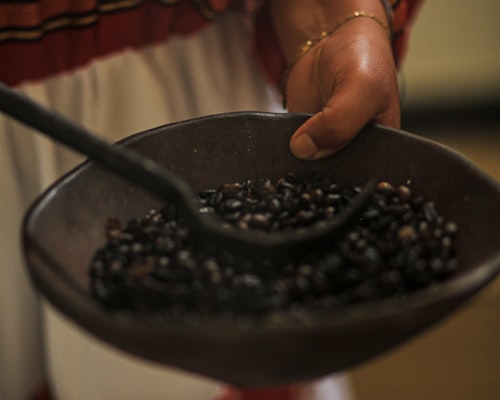
An Ethiopian goat herder named Kaldi notices his goats dancing after eating red cherries from a particular shrub. He brings the berries to a local monastery, where monks brew them into a drink that keeps them alert through evening prayers.
Coffee Reaches the Arab World
Sufi monks in Yemen adopt coffee as a spiritual aid, using it to stay awake during nighttime devotions. The port city of Mocha becomes the epicenter of the early coffee trade, giving its name to both a style of bean and a drink.
The World's First Coffeehouse
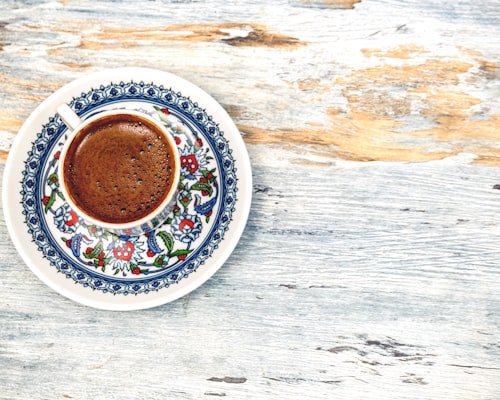
Kiva Han opens in Constantinople (modern Istanbul), establishing the coffeehouse as a social institution. These gathering places quickly multiply across the Ottoman Empire, becoming centers for chess, conversation, and political debate.
Coffee Reaches Europe
Venetian traders bring coffee to Italy around 1600. Some clergy petition Pope Clement VIII to ban the "Muslim drink," but after tasting it, he reportedly declares it so delicious it would be a sin to leave it to the infidels alone.
London's Coffee Revolution
Pasqua Rosée opens London's first coffeehouse in St Michael's Alley, Cornhill. Within decades, London has over 3,000 coffeehouses — dubbed "penny universities" because for the price of a cup, you could sit and listen to the sharpest minds of the age.

Coffee Plantations Spread Globally
European colonial powers establish coffee plantations across the tropics — in Java, the Caribbean, and Brazil. The global coffee trade booms, but it's built on the backs of enslaved and exploited workers whose labor makes the commodity affordable.
The First Espresso Machine
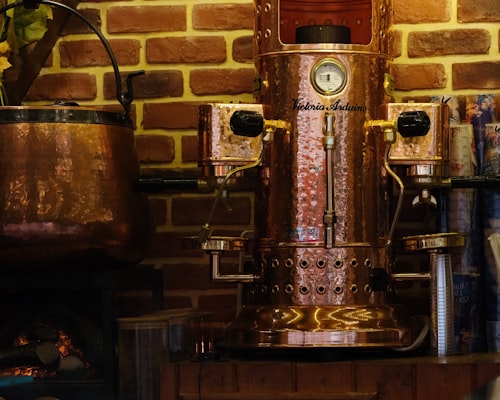
Angelo Moriondo of Turin, Italy, patents the first machine for brewing coffee with steam and pressure. His invention lays the groundwork for espresso culture — though it takes decades of refinement before the machines produce anything like modern espresso.
Peet's Coffee Opens
Alfred Peet, a Dutch immigrant with deep knowledge of the coffee trade, opens Peet's Coffee in Berkeley, California. He introduces Americans to dark-roasted, high-quality beans — a radical departure from the watery, canned coffee that dominated the postwar era.
Starbucks Founded
Three friends inspired by Alfred Peet open the first Starbucks at Pike Place Market in Seattle. Originally a bean retailer, Starbucks transforms into a café empire after Howard Schultz joins in 1982 and reimagines it as an American version of Italian espresso bars.
Third Wave Coffee
Trish Rothgeb coins the term "third wave" to describe a movement that treats coffee like wine — with attention to origin, processing, and terroir. Roasters like Intelligentsia, Counter Culture, and Stumptown lead the charge, buying directly from farmers and roasting lighter to highlight each bean's character.
The Fourth Wave — Contested
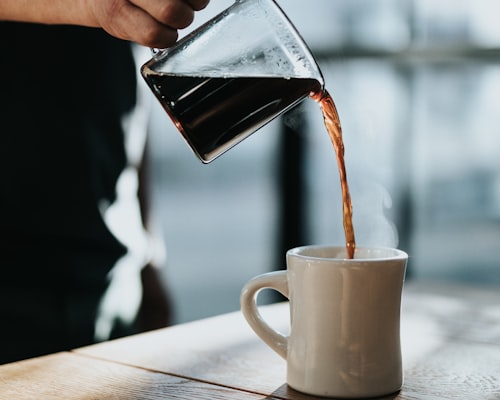
Ask four coffee professionals what the fourth wave means and you'll get five answers. One says it's scientific measurement — refractometers replacing palate memory. Another says it's scalability — specialty coffee finally reaching the masses. A third points to accountability — supply chains forced into transparency. A fourth gestures at processing innovations that would have been heresy a decade ago. They're all right. That's the point.