% Arabica
The space is the brand, and the brand is everywhere
Architectural MinimalismPart of Architectural Minimalism — chains where the physical space is the product — stripped-back interiors that treat coffee as one element in a designed experience.
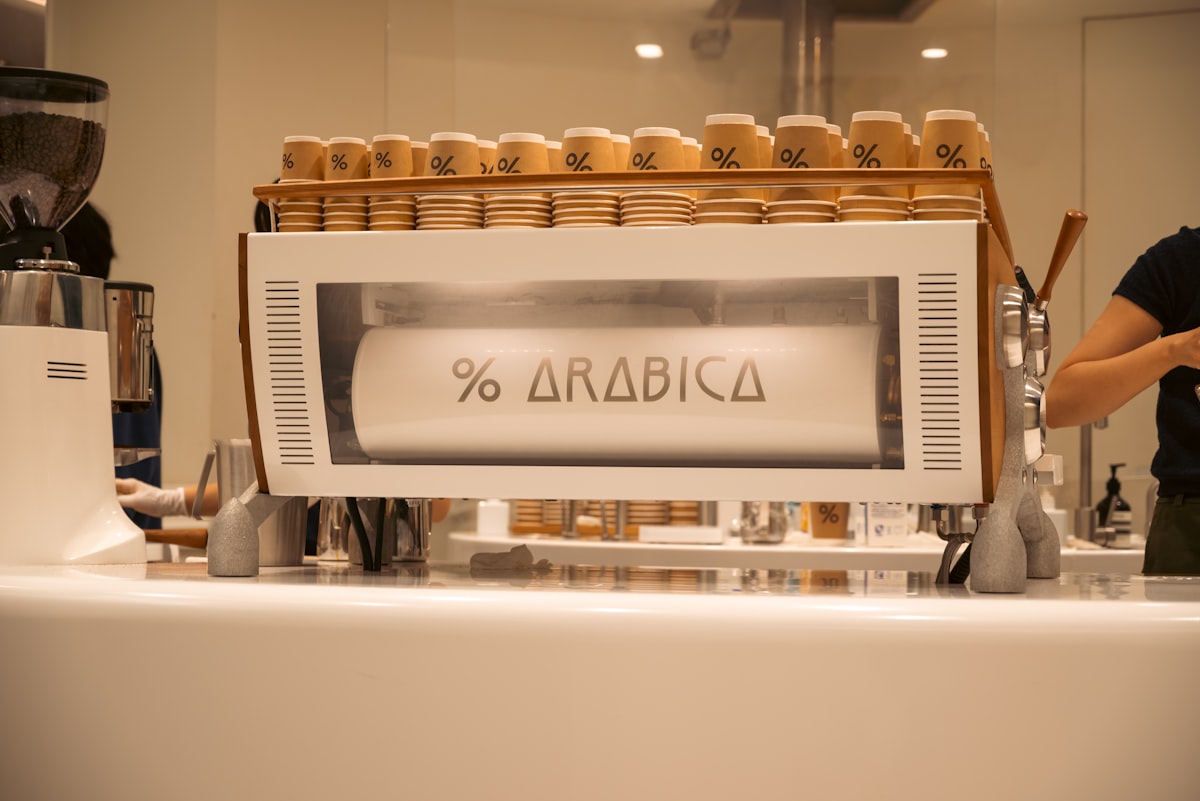
Kenneth Shoji opened the first % Arabica in Kyoto's Higashiyama district in 2014, positioned directly facing the Yasaka Pagoda. The location was the thesis statement: a white-walled, glass-fronted box with a single Slayer espresso machine as its visual centerpiece, framed against one of Japan's most photographed landmarks. The coffee was good. The Instagram potential was extraordinary.
A decade later, % Arabica operates over 150 locations across 20 countries, from Kuwait to London to Shanghai. Each store follows the same architectural logic — monochromatic minimalism, premium equipment displayed as sculpture, and an aggressive selection of locations in tourist-heavy, architecturally significant settings. The brand's expansion speed would be impressive for a tech startup; for a coffee company, it's unprecedented.
The criticism is predictable: style over substance, Instagram bait, a coffee brand that happens to serve coffee. The defense is more interesting: % Arabica understood, earlier than almost anyone, that the physical environment where you drink coffee is not separate from the coffee experience. They designed for that insight and built a global chain around it.
Design Vocabulary
Monochromatic white interiors with a focus on premium espresso equipment as sculptural elements. Each location adapts to its architectural context — a converted train car in Kyoto, a modernist cube in Kuwait — but maintains an instantly recognizable visual language. The % logo, angular and abstract, reads as a fashion mark rather than a food brand.
Sourcing Philosophy
% Arabica owns a coffee farm in Hawaii and sources additional beans from select origins. The company emphasizes its Slayer espresso machines and the technical quality of extraction, positioning sourcing as part of a larger system of quality control rather than the primary narrative.
Notable Locations
Higashiyama
Kyoto, JapanThe original — floor-to-ceiling glass facing Yasaka Pagoda. Still the most photographed % Arabica location and the clearest expression of the brand's design thesis.
Also in ExploreThe Dubai Mall
Dubai, United Arab EmiratesA flagship in one of the world's busiest malls, demonstrating that the minimalist aesthetic scales to high-traffic commercial environments.
Arashiyama
Kyoto, JapanLocated near the famous bamboo grove — the second Kyoto location extended the pattern of placing cafés at iconic landmarks.
Also in ExploreTimeline
Kenneth Shoji opens first location in Kyoto's Higashiyama district
Expands to Kuwait, beginning rapid international growth
Opens in Hong Kong, Shanghai, and multiple Middle Eastern cities
Reaches 100+ locations across 20 countries
Surpasses 150 stores — one of the fastest global expansions in specialty coffee